TEXAS RULES OF CIVIL PROCEDURE / RULE 166a
TRCP 166a: Summary judgment
Explore motions, responses, hearing deadlines, rulings and evidence under Rule 166a.
Traditional and no-evidence motions ask different questions
Texas Rule of Civil Procedure 166a distinguishes a traditional summary judgment motion from a no-evidence motion. A traditional motion seeks to establish that no genuine issue of material fact exists and that the movant is entitled to judgment as a matter of law. A no-evidence motion challenges evidence of an essential element on which the nonmovant would bear the burden at trial. A motion may combine both approaches.
The current rule separates briefing from hearing deadlines
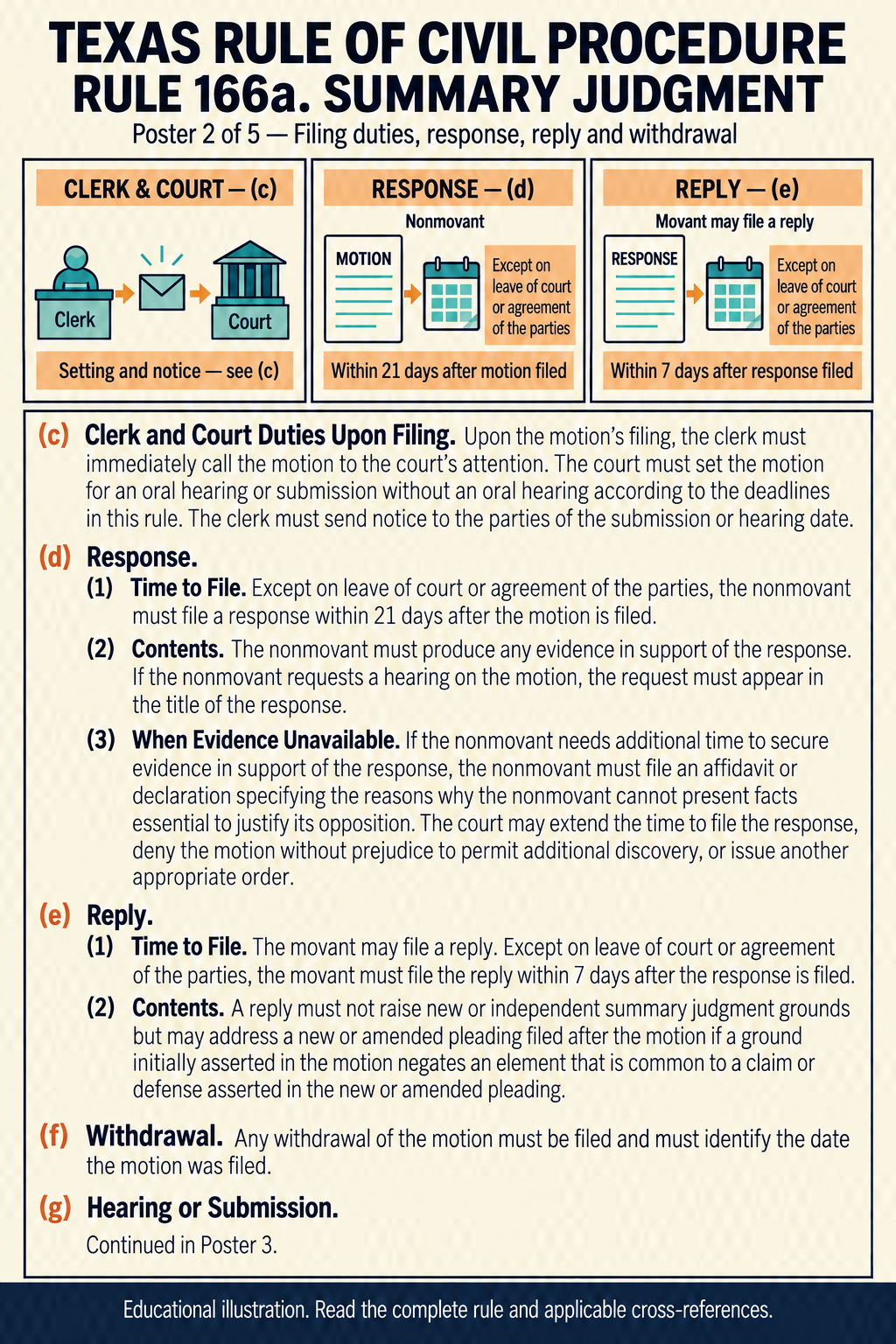
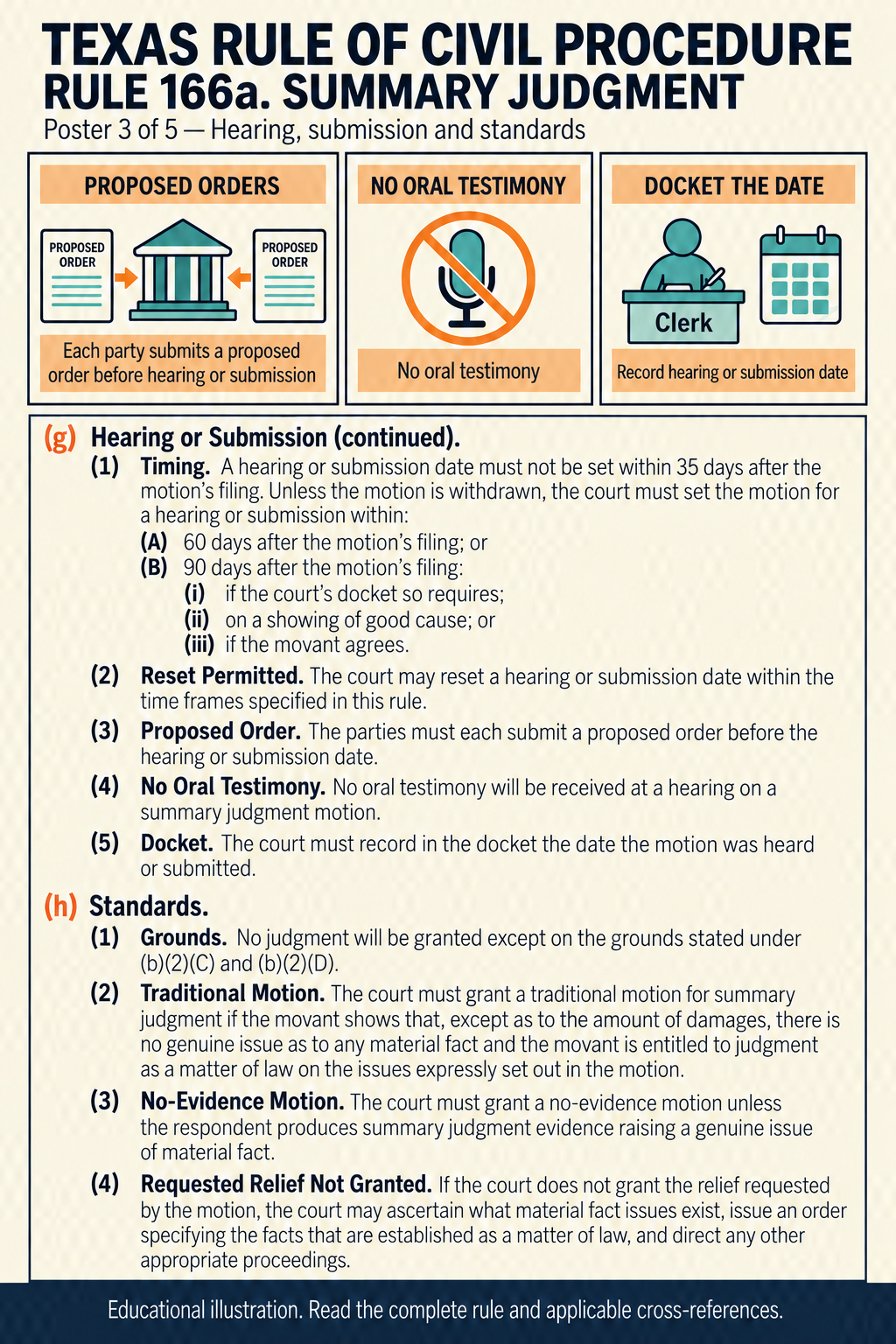
The 2026 rewrite addresses the motion, response, reply, hearing or submission, and ruling in separate provisions. Subsections (d), (e), (g) and (i) supply the relevant timing requirements and qualifications. Check the applicable version and any governing order before relying on an older summary judgment timetable.
Connect the evidence to the challenged grounds
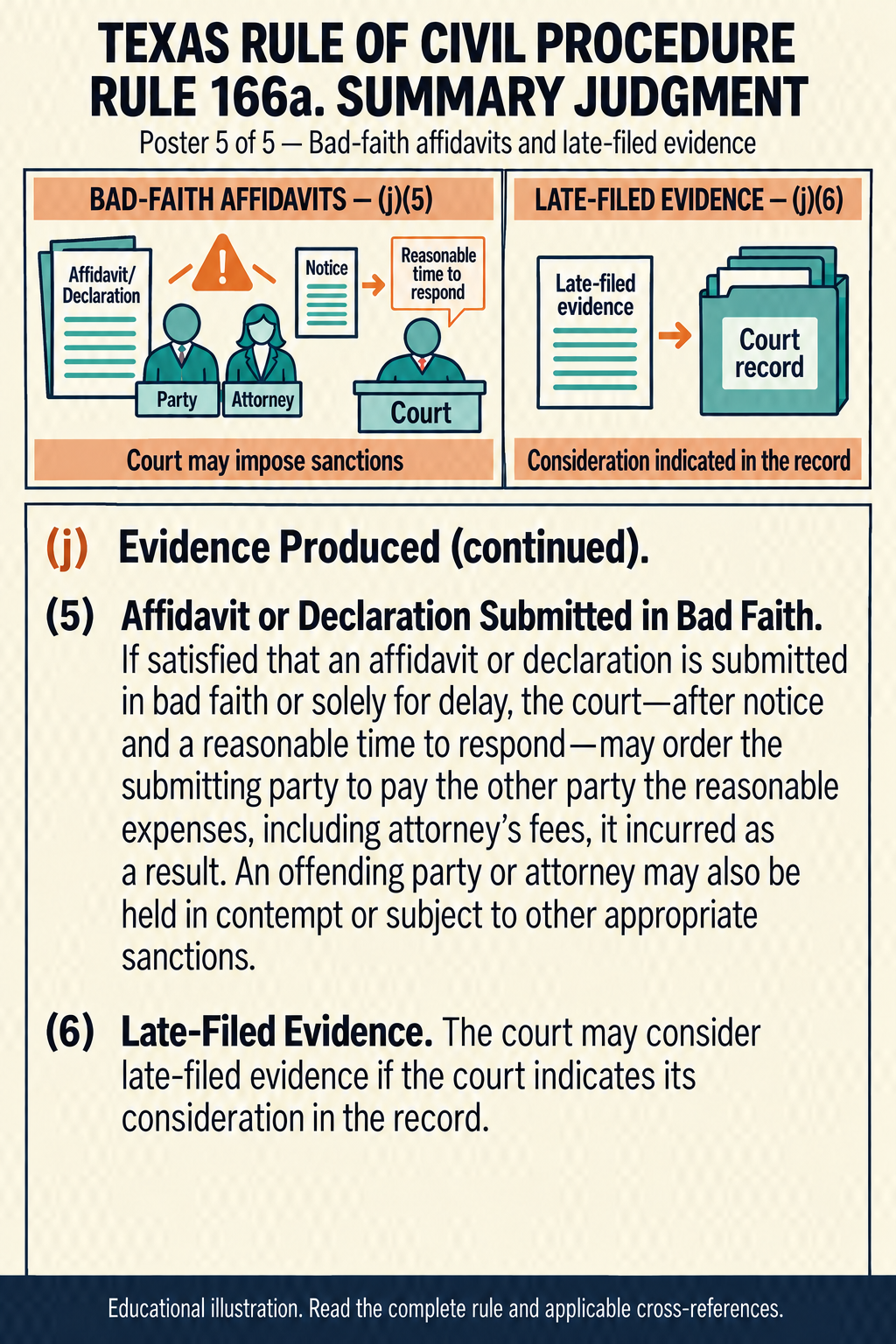
Subsection (h) states the standards for granting the motion, and subsection (j) governs supporting and opposing evidence. For a no-evidence motion, the respondent must produce summary judgment evidence raising a genuine issue of material fact to avoid a grant under subsection (h)(3). The five illustrations follow the current rule through briefing, scheduling, the ruling and evidence.
THE ILLUSTRATED RULEBOOK
Rule 166a, illustrated