
TEXAS RULES OF CIVIL PROCEDURE / RULE 10
TRCP 10: Withdrawal of attorney
Read Rule 10 with its complete assigned text and an official source link.
Rule 10, illustrated
Read the assigned text for poster 1
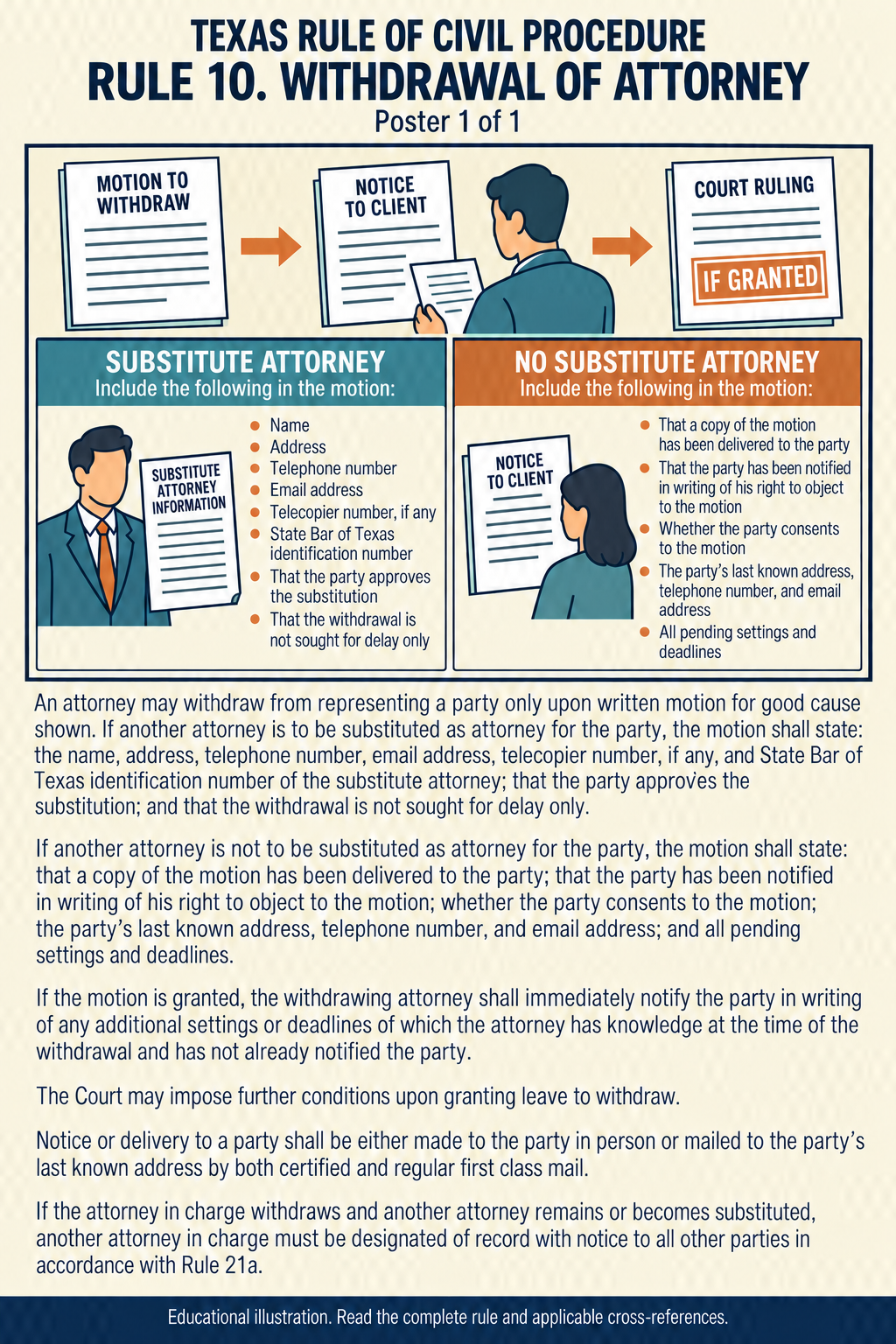
An attorney may withdraw from representing a party only upon written motion for good cause shown. If another attorney is to be substituted as attorney for the party, the motion shall state: the name, address, telephone number, email address, telecopier number, if any, and State Bar of Texas identification number of the substitute attorney; that the party approves the substitution; and that the withdrawal is not sought for delay only. If another attorney is not to be substituted as attorney for the party, the motion shall state: that a copy of the motion has been delivered to the party; that the party has been notified in writing of his right to object to the motion; whether the party consents to the motion; the party's last known address, telephone number, and email address; and all pending settings and deadlines. If the motion is granted, the withdrawing attorney shall immediately notify the party in writing of any additional settings or deadlines of which the attorney has knowledge at the time of the withdrawal and has not already notified the party. The Court may impose further conditions upon granting leave to withdraw. Notice or delivery to a party shall be either made to the party in person or mailed to the party's last known address by both certified and regular first class mail. If the attorney in charge withdraws and another attorney remains or becomes substituted, another attorney in charge must be designated of record with notice to all other parties in accordance with Rule 21a.