TEXAS RULES OF CIVIL PROCEDURE / RULE 21d
TRCP 21d: Appearances at court proceedings
Understand methods of appearance, objections, good-cause factors and public access.
The notice identifies how participants will appear
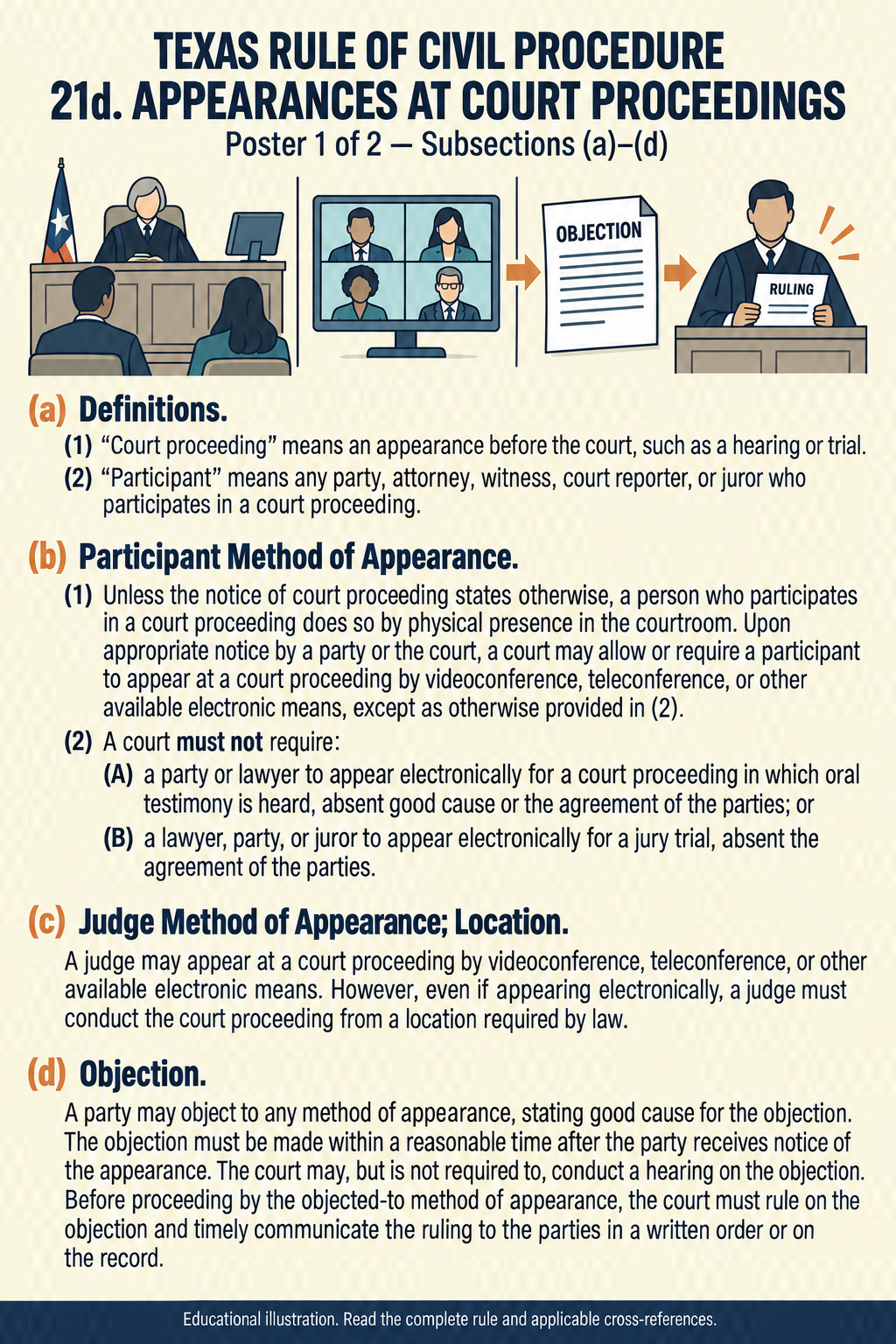
Texas Rule of Civil Procedure 21d starts with physical appearance in the courtroom unless the notice states otherwise. With appropriate notice, a court may allow or require electronic participation, subject to the rule’s restrictions. For example, requiring a party or lawyer to appear electronically when oral testimony is heard requires good cause or the parties’ agreement. Requiring a lawyer, party or juror to appear electronically for a jury trial requires the parties’ agreement.
An objection calls for a ruling before proceeding
Under subsection (d), a party may object to a method of appearance for good cause within a reasonable time after receiving notice. The court need not hold a hearing on that objection, but it must rule and timely communicate the ruling in a written order or on the record before proceeding by the challenged method.
Good cause and public access have express safeguards
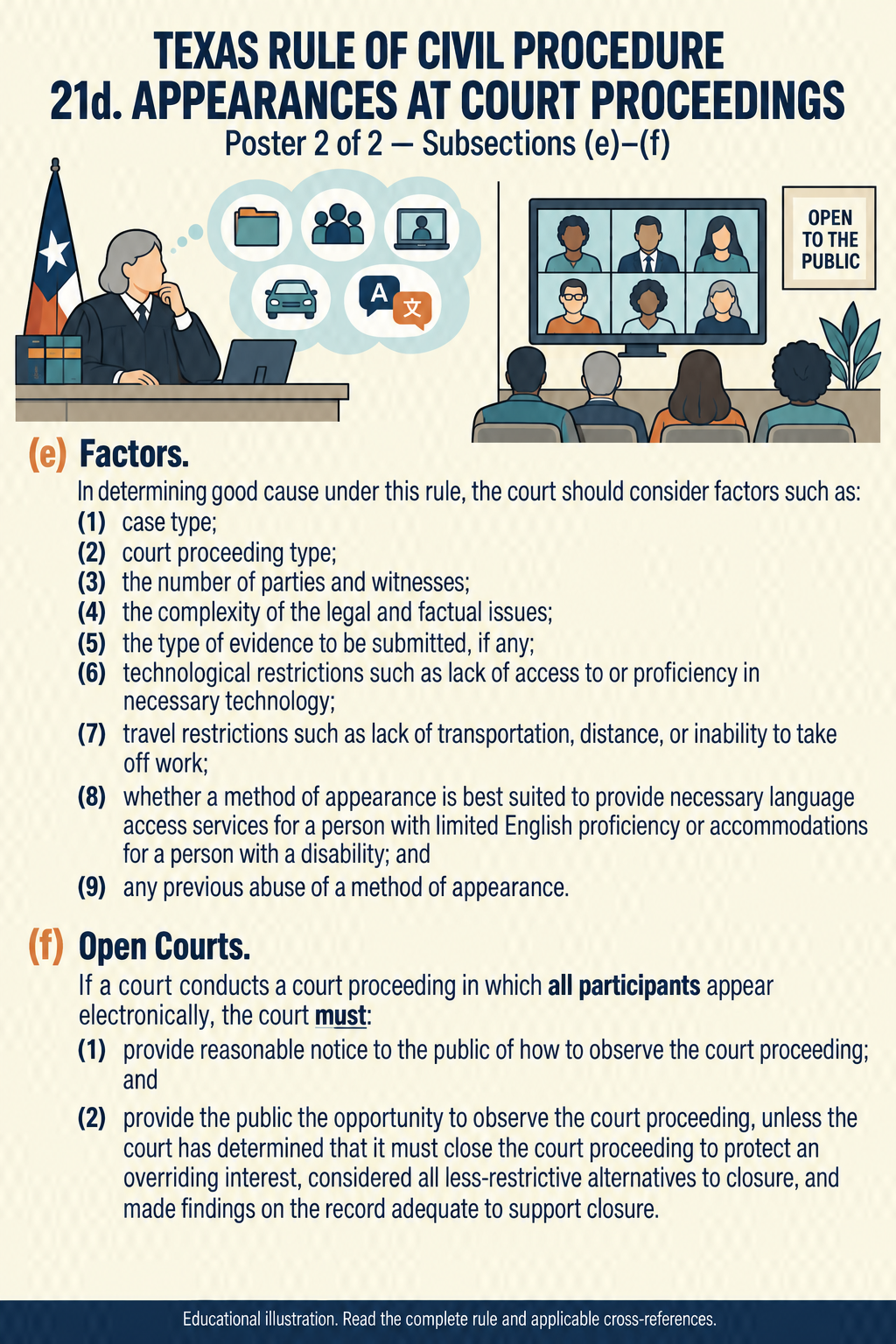
Subsection (e) lists considerations such as technology, travel, evidence and accessibility. Subsection (f) requires notice and an opportunity for public observation of fully electronic proceedings, subject to its stated closure requirements. The two illustrations cover these provisions and the separate limits on a judge’s location.
THE ILLUSTRATED RULEBOOK
Rule 21d, illustrated